Most people arrive expecting oil, a quiet room and an hour of pressure. Traditional Thai massage is a different thing altogether, and the difference is the reason people keep coming back to it once they have understood what it is.
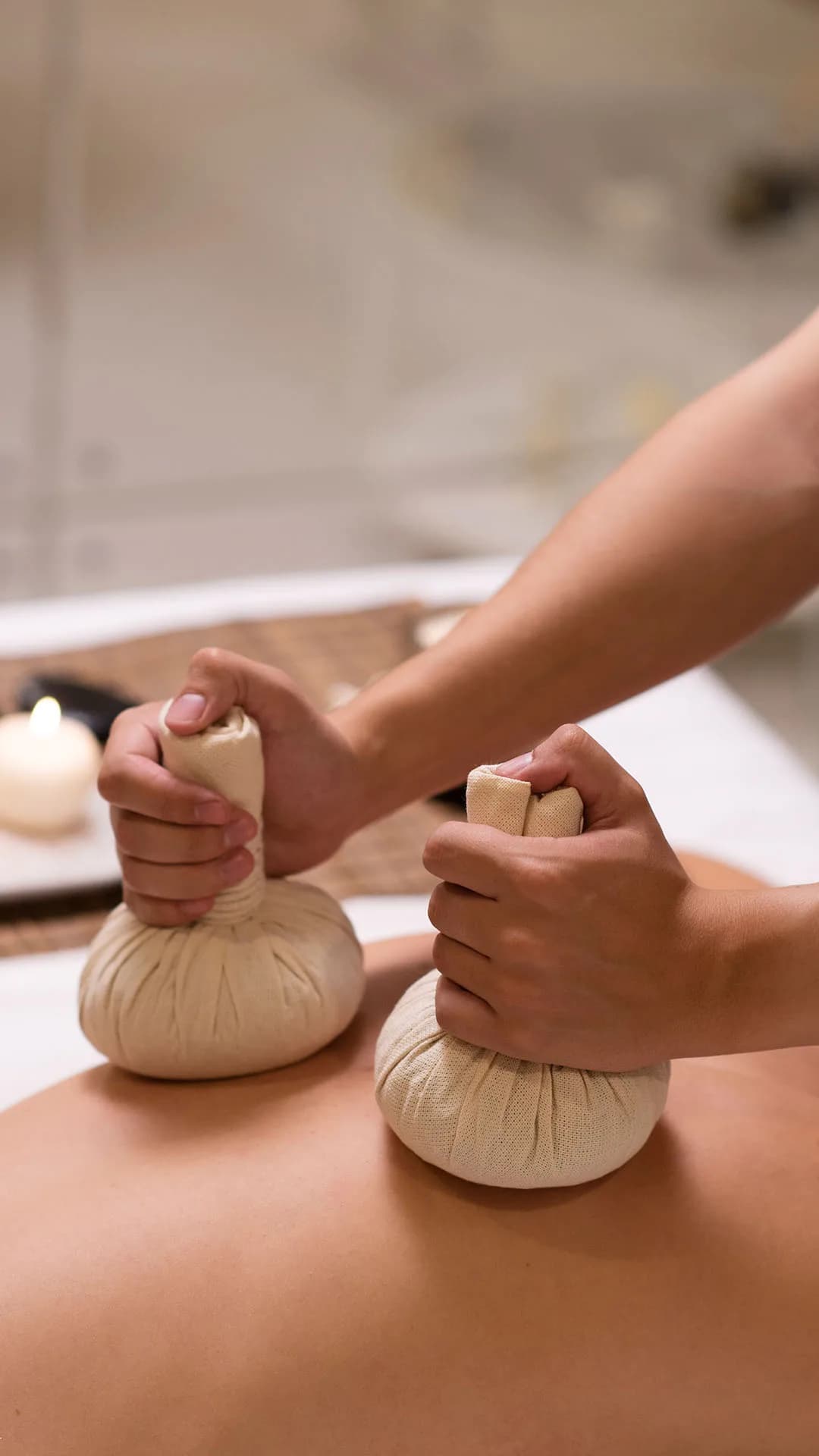
You stay clothed. There is no oil. You lie on a mat rather than a table, and the therapist works with their hands, forearms, elbows, knees and feet along lines of the body, moving you through slow assisted stretches as they go. It is sometimes called lazy yoga, which undersells the skill involved but does describe the shape of the hour.
What it feels like
Deliberate, and more active than you expect. You are moved rather than only pressed, and a good therapist reads how far a joint wants to go rather than forcing it. Pressure is firm but it is not meant to hurt — the useful edge is the one you can breathe through, and a therapist should be asked to ease off the moment it is past that.
Afterwards, most people describe two things: feeling longer through the hips and shoulders, and feeling settled in a way that is harder to name. The first is the stretching. The second has more to do with an hour of being moved slowly and not looking at a screen.
What people come for
- Range of movement. Desk work shortens the front of the hip and rounds the shoulders, and Thai massage spends most of its time in exactly those places.
- Tension that has settled in along the shoulders and the upper back, which is where a week of sitting tends to end up.
- Sleep. Plenty of guests book an evening treatment for this reason alone.
- Recovery after effort — a round of golf, a long flight, a week of training.
Who should be careful
Thai massage involves stretching and firm pressure, so it is not right for everyone on every day. Tell the therapist before you start if you are pregnant, recovering from surgery or a fracture, being treated for anything affecting your bones, joints, circulation or blood pressure, or if you have an injury that is still acute. Some of these mean a gentler treatment; some mean a different one.
None of this is medical advice, and massage is not a treatment for a medical condition. If something hurts in a way that worries you, see a doctor first — a therapist is the right person to work with a body, not to diagnose one.
How to get the most from it
- Eat lightly beforehand. A full stomach makes the twists uncomfortable.
- Say what you want from the hour at the start, and say it plainly — more pressure, less, leave the neck alone.
- Breathe out into a stretch rather than holding your breath against it.
- Drink water afterwards and give yourself a slow half hour rather than going straight back to a desk.
If you have never had one, book a longer session rather than the shortest. Traditional Thai massage works through the body in sequence, and an hour is the point at which that sequence has room to finish.